


Number Crush: Match Ten Puzzle
4.61.18K Reviews
App Specs
- Version
- 2.12.1
- Updated On
- License
- Free
- Downloads
- 1,000,000+
- Developer
- Microjoy Games
- Categories
- Board
- Platform
- Android, iOS
Screenshots
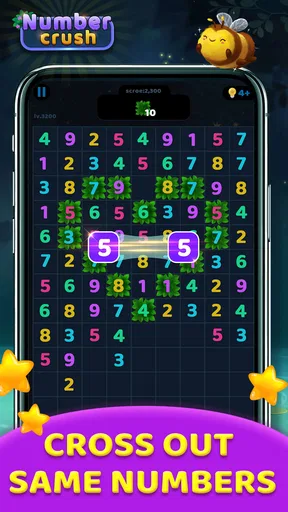
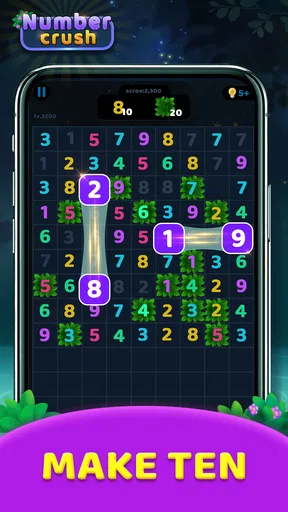
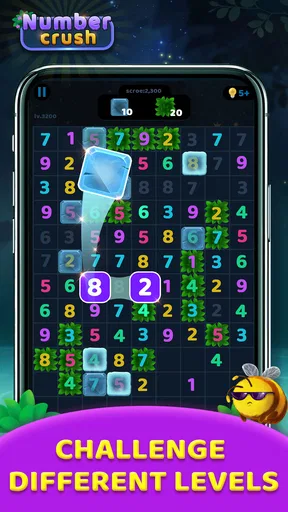
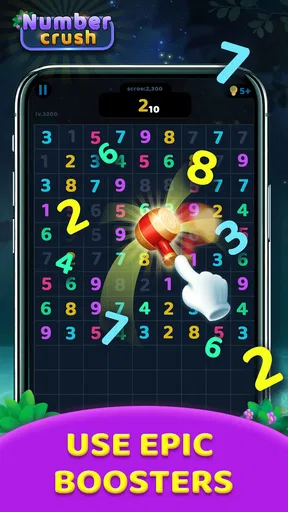
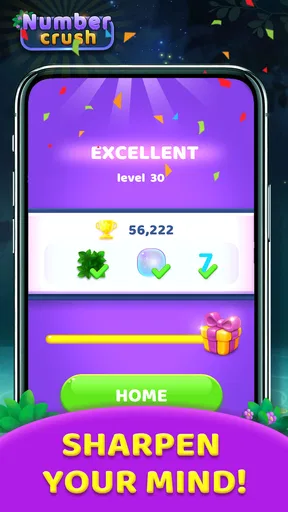
 Analysis by AppCompare
I like number puzzles that give me a clear problem to work on without demanding a long setup, and Number Crush: Match Ten Puzzle fits that mood. Its appeal is the simple act of scanning a board, spotting a useful pair and deciding what to clear next. That small decision can turn a few spare minutes into a satisfying run, though the same loop may feel repetitive if you want a story, a changing set of mechanics or a strong sense of variety from one session to the next.
What the game feels like now
Number Crush: Match Ten Puzzle is a free board game from Microjoy Games, built around matching numbers to reach a target of ten. The idea is easy to grasp, so I can get into a round quickly rather than learning a complicated ruleset. Its simple presentation keeps attention on the numbers, which is useful when I want a quiet puzzle rather than a visually busy game.
The game has an average rating of 4.6 from around 78,000 ratings, and it has been installed over a million times. Those figures suggest that its straightforward number-matching approach has found a sizable audience, but they don’t mean it will suit every puzzle fan. I’d recommend it most to someone who enjoys visual scanning, quick arithmetic and making small tactical choices without needing a narrative to pull them forward.
Its current version is 2.12.0, and it runs on Android 6.0 or later. The game is rated Everyone, so its basic puzzle premise is suitable for a broad audience. It is free to install, with optional in-app purchases ranging from $0.99 to $99.99 per item. I’d treat the purchase options as something to review for yourself rather than a reason to spend: the central appeal is the matching puzzle, and I would first see whether the standard play loop is enough for me.
How the matching loop rewards planning
The basic goal is to clear pairs that add up to ten. That sounds like a simple arithmetic exercise, but the board makes it a visual-search task too: I have to notice what is available, judge which match is useful now and avoid clearing options that could help later. When the board is easy to read, a move can feel obvious; when numbers are scattered in awkward positions, the challenge becomes keeping track of possibilities rather than doing difficult maths.
One practical way I’d approach a crowded board is to pause before taking the first pair I spot. I’d scan for matches that open up more choices, then use a hint only after I’ve checked the board carefully myself. That makes the hint system more valuable as a nudge than as a shortcut. It can help restart my thinking when I’m stuck, but leaning on it too quickly risks removing the very decision-making that makes the puzzle satisfying.
The balance is best for players who like a modest mental workout. It asks for attention and planning without turning every move into a demanding calculation. If you find arithmetic puzzles relaxing, that combination can be a welcome change from games that rely on speed. If you want complex logic chains, deep strategy or a steadily evolving ruleset, the core match-to-ten loop may feel too narrow after the novelty wears off.
Worth Reading Before You Choose

EA SPORTS FC Mobile 26 Is a Bigger Football Game, but It Takes Time

Flipboard Shows What News Apps Must Do Beyond the Feed

Switching to Android Auto Means Rethinking Your Driving Routine

Google Calendar Makes a Crowded Week Easier to Manage

Ludo King Makes the Most of the Minutes Between Plans

Baby Panda World Brings Quick Play to Modern Phones, but Its Game Library Feels Busy
Where it fits into an ordinary day
I can see this working well during a short wait: while tea is brewing, before an appointment, or during a quiet break between tasks. The rules are easy to pick back up, so I don’t need to remember a plot or a long sequence of instructions. For a longer session, the same simplicity can also be a drawback. If I keep playing, I’m relying on the board and the desire to improve my progress, not on a new story beat or a major change in how the game works.
For example, if I had ten minutes before leaving home, I’d open a round and focus on clearing pairs that make the remaining board easier to read. If I were interrupted, the kind of low-pressure puzzle it offers would be easier to return to than a fast action game, though I’d still avoid starting when I needed to leave immediately. The game’s relaxed pace is most useful when I can give it a little attention rather than constantly switching away mid-decision.
Compared with a word search, it asks less of vocabulary and more of number recognition. Compared with a traditional Sudoku-style puzzle, it feels more immediate: I’m matching pairs rather than filling a grid through a sequence of formal deductions. And beside a match-three game, it has a more arithmetic-minded focus and less emphasis on chaining colorful combinations. Those are differences in the kind of attention each game asks for, not a claim that one format is universally better.
Progress, hints and the trade-offs
The game presents progression through levels and challenges, giving me a reason to continue beyond a single board. That structure is helpful if I enjoy having a next objective, but I wouldn’t choose it on the assumption that every stage will feel entirely new. The underlying match-to-ten decision remains central, so the sense of freshness depends on how much I enjoy applying the same rule to different layouts and obstacles.
The hint option is a useful pressure valve. When I’ve overlooked a pair, a nudge can get me moving again without asking me to abandon the round. My preferred workflow would be to scan once for direct matches, scan again for moves that expose more options, and only then use a hint. That small pause helps separate a genuinely blocked position from a moment when I’m simply looking too quickly.
There are trade-offs in its simplicity. A clean board-focused presentation is easy to understand, but players who want elaborate effects or a strong visual world may find it plain. The recurring number search can also become tiring if I play for a long stretch. I’d use it in short sessions when I want a focused diversion, and switch to a broader puzzle game if I’m looking for changing mechanics or a more varied challenge.
What the release history tells me—and what it doesn’t
The game was released on September 3, 2022, and its current version is 2.12.0. That establishes that it has continued to receive version changes since launch, which is a useful sign for someone considering a game they may return to. It does not, by itself, tell me which particular features changed or how each update affected play, so I wouldn’t treat a version number as proof of a specific improvement.
For someone who already plays, the practical question is whether the current build continues to deliver the straightforward number puzzle they came for. If it does, a version update matters mainly as the version they’ll be using now, rather than as a reason to expect a wholly different game. If you’re deciding whether to install it for the first time, I’d judge it on the matching loop, the level structure and whether the hint-based assistance suits your preferred balance of challenge.
That distinction matters because update history can invite expectations that the game has added a particular mode or solved a particular annoyance. I’d separate what is visible in the current experience from what I might hope to see later. For future changes, I’d watch for clearer variety between boards, useful refinements to the way a stuck player gets help, and a smoother fit for short sessions. Those are things I’d welcome, not claims about features already present.
Who should try it, and who may prefer something else
I’d point number-puzzle fans toward it if they want quick access to a familiar rule with enough board scanning to keep the mind engaged. It may also suit someone who usually avoids games with long tutorials or elaborate controls. The accessible premise makes it easy to share with a family member who likes simple logic games, while the Everyone rating is consistent with that broad, casual appeal.
I’d steer away from it if your ideal game depends on competitive play, a rich story, frequent changes in the core rules or a demanding strategic system. It is also not my first choice when I want a completely passive break: even a calm puzzle asks me to look closely and plan a move. If I’m too tired to concentrate, a simple audio or video break may be a better fit than scanning a board for combinations.
Before installing, a few practical questions are worth considering. Do I need to be good at maths? No advanced arithmetic is central to the basic idea; the more relevant skill is noticing which numbers make a pair of ten. Can I play casually? Yes, the simple rules make it easy to approach in short bursts, although I’d still choose a moment when I can focus. What if I get stuck? The hint system offers a nudge, and I’d save it for when a careful second scan hasn’t helped. Do I have to pay? The game is free to install, while optional in-app purchases are available; I’d check the purchase prompts and decide for myself whether any are worthwhile.
A considered recommendation
There’s a pleasingly direct quality to this board puzzle: I see a number, look for its partner, and decide whether that move helps the rest of the board. The level progression and hints give the loop some structure without changing its basic identity. For me, that makes it a useful choice when I want a small, self-contained challenge rather than a game that asks for a long commitment.
The limits are just as clear. Its number-matching focus won’t satisfy everyone, and repeated board scanning can feel samey if I expect a more varied puzzle each time I play. The free download lowers the barrier to trying it, but the optional purchases mean I’d pay attention to any spending prompts instead of assuming every part of the experience is cost-free. I’d recommend giving it a try if you enjoy arithmetic-minded board puzzles and want something easy to pick up; I’d choose another genre if I wanted story, competition or a deeper strategic payoff.
If you’re anything like me and you enjoy a good puzzle game to unwind, then you might want to check out Number Crush: Match Ten Puzzle. It’s one of those games that creeps up on you, and before you know it, you’ve spent an entire afternoon trying to beat your high score. Let me take you on a little tour of this addictive app and share my experience with it.
First Impressions
When I first opened Number Crush: Match Ten Puzzle, I was welcomed by a clean and colorful interface. The game’s design is simple yet engaging, which is perfect for a puzzle game. You’re not bombarded with unnecessary graphics or complicated menus, which is a huge plus in my book. The tutorial is short and sweet, quickly getting you into the action without any fuss.
How It Works
The game mechanics are straightforward but challenging enough to keep you hooked. The main objective is to match numbers that add up to ten, clearing the board as you go. It sounds easy, right? Well, don’t be fooled! The further you progress, the trickier it gets, with numbers scattered all over the place. It’s like a math lover’s dream come true. If you enjoy a mental workout, this game definitely delivers.
Features That Stand Out
One thing I loved about this game is the variety of levels and challenges. There’s a satisfying sense of progression as you advance through different stages, each with its own unique layout and obstacles. The developers have done a great job keeping things fresh and exciting.
Another neat feature is the hint system. If you ever find yourself stuck (and trust me, you will), you can use a hint to nudge you in the right direction. It’s a great way to keep the game flowing without ruining the challenge.
Why You’ll Keep Coming Back
What makes Number Crush: Match Ten Puzzle so addictive? For me, it’s the perfect combination of challenge and relaxation. The game is designed to be played at your own pace, making it ideal for those moments when you need a quick break or a longer gaming session. Plus, there’s always a new level to conquer, which keeps things interesting.
The sound effects and music also deserve a mention. They’re soothing and contribute to the overall calming vibe of the game. It’s like having a little zen moment while you’re busy crunching numbers.
Final Thoughts
In a world where mobile games can often feel overwhelming and cluttered, Number Crush: Match Ten Puzzle is a breath of fresh air. It’s simple, addictive, and offers just the right amount of challenge. Whether you’re a seasoned puzzle enthusiast or someone looking for something to pass the time, this game is definitely worth a download.
So, if you’re ready to put your brain to the test, head over to your app store and give Number Crush: Match Ten Puzzle a try. Just a little warning—it might just become your new favorite way to unwind!
Pros
- Engaging gameplay with simple mechanics.
- Visually appealing and colorful design.
- Suitable for all age groups.
- Levels increase in difficulty
- keeping it challenging.
- Offline play available
- no internet needed.
Cons
- Contains ads that may interrupt gameplay.
- In-app purchases for hints and boosters.
- Limited daily rewards for free users.
- Some puzzles can be repetitive.
- Occasional lag on older devices.
FAQs for Number Crush: Match Ten Puzzle
What is Number Crush: Match Ten Puzzle, and how does it work?
Number Crush: Match Ten Puzzle is a brain-teasing game where players match numbers to add up to ten. The goal is to clear the board by strategically pairing numbers. With intuitive controls and increasing difficulty levels, it challenges your mathematical skills and strategic thinking as you advance through the game.
Is Number Crush: Match Ten Puzzle suitable for all ages?
Yes, Number Crush: Match Ten Puzzle is designed for players of all ages. Its simple mechanics and educational nature make it a great option for children and adults alike. The game helps improve mental math skills and provides engaging entertainment for family members of varying age groups.
Does Number Crush: Match Ten Puzzle require an internet connection to play?
No, Number Crush: Match Ten Puzzle can be played offline. This makes it perfect for on-the-go gaming without worrying about internet connectivity. However, certain features, such as leaderboards or updates, may require an internet connection to access or utilize fully.
Are there in-app purchases in Number Crush: Match Ten Puzzle?
Yes, Number Crush: Match Ten Puzzle offers in-app purchases. While the game is free to download and play, users can purchase additional features or hints to enhance their gaming experience. These purchases are optional and not necessary to enjoy the main aspects of the game.
What are the system requirements for Number Crush: Match Ten Puzzle?
Number Crush: Match Ten Puzzle is compatible with most modern Android and iOS devices. It requires a minimal amount of storage space and runs smoothly on devices with basic specifications. For an optimal experience, ensure your device is updated to the latest operating system version.


